
 Home
Home JLJL33 Login
 Live Casino
 Slots
Slots Fish game
 Sports
 Promotion
 App
App News
NewsBlackjack is one of the most popular card games in Asia and around the world. This game relies not only on luck but also requires players to understand the rules, scoring methods, and especially how to deal cards. In tournaments or games with strict regulations, dealing cards is not merely a technical maneuver but a core element that ensures fairness, transparency, and the excitement of the game. JLJL33 will help you understand in detail how to deal blackjack cards according to current standards, analyze the differences between regular dealing and dealing in a professional competition environment, and point out common mistakes and how to correct them.
How to Deal Blackjack Cards Accurately and Transparently
In tournaments or professional games, the way to deal blackjack cards is very clearly and strictly regulated. Every step, from shuffling and cutting to dealing, must adhere to a strict procedure to minimize the possibility of cheating and ensure randomness and fairness for all players.
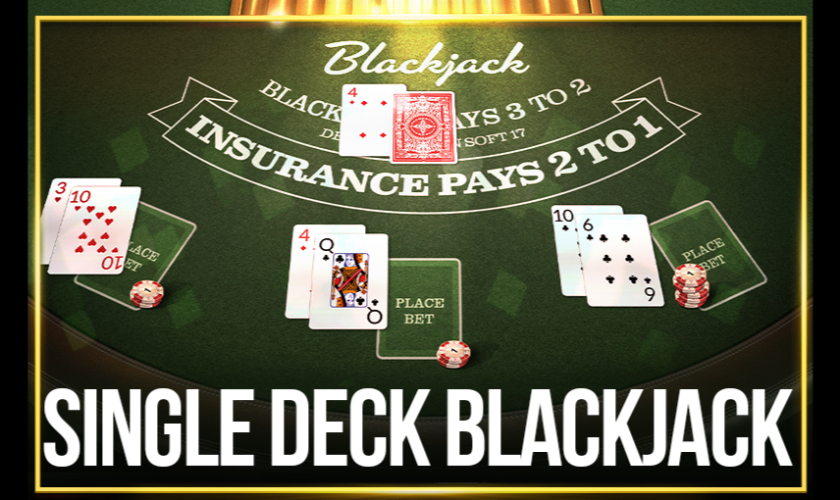
Number of Players and Decks Used
A standard blackjack table typically has 4 to 8 players, not including the dealer. The number of players may vary depending on the rules of each table or tournament, but it is always limited to ensure a steady pace and control of the game.
Unlike home play, using a standard 52-card deck, professional tournaments use 4 to 8 mixed decks. This increases randomness, limits card counting strategies, and forces players to focus more on risk management and sound decision-making.
Dealing Rules and the Dealer’s Role
The dealer is directly responsible for dealing blackjack cards. They must deal the cards in the correct order, with the correct number of cards for each player and for themselves. Any mistakes in the dealing process can invalidate the game.
Dealers are not allowed to arbitrarily change the rules of the game. For example, they must adhere to the mandatory drawing rule, usually drawing more cards until a minimum of 17 points is reached. These rules help reduce subjectivity and ensure consistency in every game.
Randomness and Transparency in Dealing Cards
Randomity is the foundation of any legitimate card game. In blackjack, cards must be shuffled thoroughly by hand or with a specialized machine before dealing. Players have the right to observe the entire process to ensure there are no signs of irregularities.
Transparency in blackjack card dealing helps build trust between participants. Any secretive, concealed, or unusual dealing practices are unacceptable in a professional playing environment.
How to Deal Blackjack for Beginners
For beginners, understanding the correct way to play blackjack will help you avoid many unnecessary mistakes and quickly get used to the pace of the game. Below are the most basic steps.
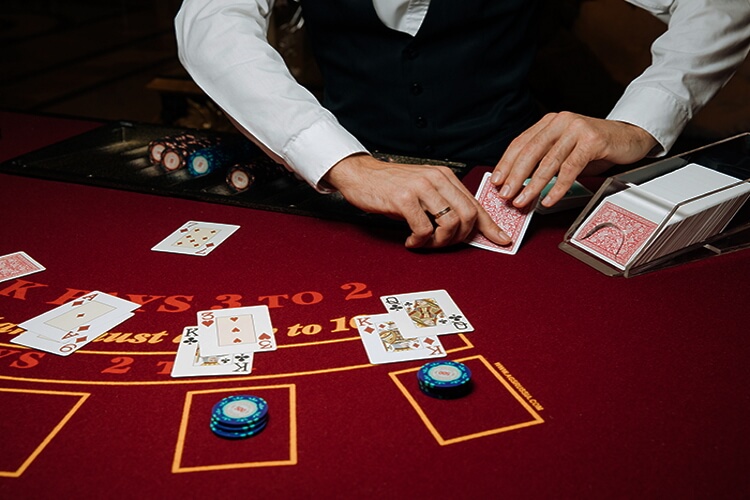
Preparing Cards and Player Positions
Before starting, prepare a complete deck of cards and clearly identify who the Dealer is. Players will sit around the table, while the Dealer usually stands or sits in a fixed position.
Cards are shuffled thoroughly before dealing. In many cases, players may have the right to cut cards to increase transparency and randomness.
Blackjack Dealing Procedure
The Dealer will deal each player two face-down cards. The Dealer will have one face-up and one face-down card. The order of dealing cards is usually clockwise or counterclockwise, but must be agreed upon from the beginning.
Revealing a card from the Dealer gives players more information to make decisions about whether to draw or stand, thus increasing the strategic element of the game.
Scoring Rules and Game Objectives

The objective of blackjack is to reach a total score as close to 21 as possible without exceeding it. Cards from 2 to 10 retain their value, J, Q, and K count as 10 points, while the Ace can count as 1 or 11 points depending on the situation.
If a player reaches 21 points with their first two cards (usually an Ace and a 10-point card), it’s called blackjack and gives them a significant advantage in the game.
Drawing, Standing, and Dealer’s Turns
After receiving their first two cards, players have the right to draw more cards if they feel their total score is not yet safe. However, each drawing decision carries the risk of exceeding 21 points.
Once all players have completed their turns, the dealer will flip over the face-down card and continue drawing cards according to the rules. The final results are compared to determine the winner.