
 Home
Home JLJL33 Login
 Live Casino
 Slots
Slots Fish game
 Sports
 Promotion
 App
App News
NewsIn football, sometimes victory isn’t decided by the starting eleven, but by the strategic substitutions. Substitutions in football aren’t simply about taking a tired player off; they’re an art of tactical maneuvering, a brain-racking strategy for coaches. A well-timed substitution can bring a priceless goal, but a wrong choice can ruin the entire defense. Let’s explore the rules and calculations behind each substitution in football with JLJL33.
What is a substitution in football?

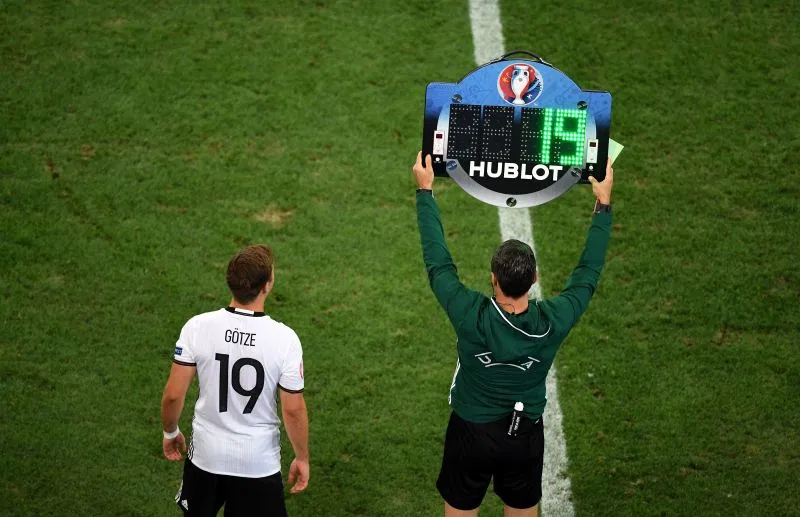
A substitution is the process of replacing a player on the field with another player from the reserve list. This procedure must be communicated to the fourth official (the fourth referee), takes place during a stoppage in play, and the player entering the field may only cross the goal line after their teammates have completely left the pitch.
Substitution rules have undergone significant changes after the COVID-19 pandemic. Previously, major leagues typically only allowed three substitutions per match. However, by 2025, most top leagues worldwide, such as the Premier League, Champions League, and World Cup, will have adopted a rule allowing five substitutions within a maximum of three stoppages (excluding halftime). This provides immense flexibility for coaches in managing personnel and coping with a packed schedule.
The strategic purpose of substitutions in football
Taking a player off the field always comes with a specific intention. There are five main objectives that every strategist aims for when making substitutions:
Tactical Change
This is the most important objective. If the team is trailing, the coach can substitute a defender for a striker to increase firepower. Conversely, if they want to preserve a fragile lead, a defensive midfielder or a strong center-back will be brought in to reinforce the defense. Substitutions allow the coach to switch from a 4-3-3 to a 5-4-1 formation or vice versa in seconds, surprising the opponent and making it difficult for them to adapt.
Improving Team Stamina
Modern football demands extremely high-intensity movement. After the 70th minute, the stamina of many players begins to decline, leading to errors in passing or exhaustion in challenges. Bringing in “fresh legs” helps the team maintain their pressing tempo, protect their lead, or continue to pressure a tired opponent’s defense.
Revitalizing the team’s morale
Sometimes, substitutions are more psychological than technical. The appearance of a star returning from injury or a young, eager player can revitalize a team’s dwindling morale. The crowd erupting at the sight of their idol on the field is also a stimulant that helps players regain focus and determination.
Game Changer
Many players are nicknamed “super-subs.” They are players with a high potential to create game-changing moments when the opponent is fatigued. With their skillful dribbling or blistering speed, these players can create unbelievable situations, breaking the deadlock of the match. Keeping a “trump card” on the bench is a way for coaches to mislead their opponents’ preparations.
Handling emergencies and injuries
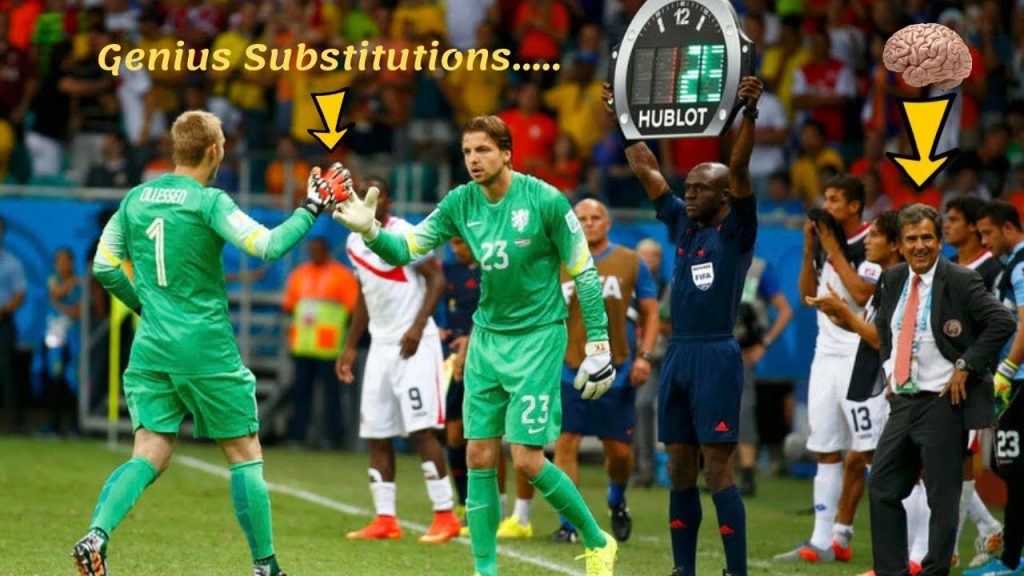
This is unavoidable. When a player suffers a serious injury or shows signs of fatigue, the coach is forced to make a substitution to protect the player’s health and ensure the team has enough players on the field. Substitutions also occur when a player has just received a yellow card and is at risk of receiving a red card, or when replacing the goalkeeper during a tense penalty shootout.
Special substitution rules
Besides the basic five-player rule, modern football also has notable supplementary rules:
- Concussion Subs: If a player is suspected of having a head injury, the team is allowed to make an additional substitution that does not count towards the official substitution quota.
- Sixth substitution: In matches with extra time (knockout rounds), each team is allowed one more substitution.
- Timing of substitutions: To avoid blatant time-wasting, the substituted player must leave the field at the nearest point on the touchline instead of walking to the technical area in the middle of the field.
Substitutions in football are not simply an administrative procedure on the field. They are an intersection of tactical mathematics, sports medicine, and human psychology. A good coach knows how to transform players on the bench into the most effective attacking force. It is this flexibility and unpredictability of personnel changes that make football so unpredictable and captivating until the very last moment.