
 Home
Home JLJL33 Login
 Live Casino
 Slots
Slots Fish game
 Sports
 Promotion
 App
App News
NewsA C-bet in poker is one of the important betting techniques used by many players to maintain an advantage after proactively raising or betting before the flop. When used at the right time and in the right context, a C-betting not only puts pressure on opponents but also helps control the pace of the game, optimize profits, and minimize unnecessary risks. In the modern poker landscape, where players increasingly understand probability, psychology, and strategy, C-betting in poker is no longer simply a “bet by habit” but has become an important part of overall strategic thinking. Let’s JLJL33 explore it in more detail in the article below.
What is C-betting in Poker?

A C-bet in poker (short for Continuing Bet) is the act of placing a bet on the flop by someone who proactively raised or bet in the pre-flop round. In other words, if you’re the one showing strength before the first three community cards are revealed, then a C-bet is the next step to maintain the narrative of a strong hand.
Essentially, a C-bet not only reflects the actual strength of your hand but is also a tactical tool to exert psychological pressure. Opponents facing a C-bet often have to make a difficult decision: continue betting with an incomplete hand or fold to avoid risk.
In modern poker, C-bets are considered a common action because many board flops don’t actually improve the hand for most players. This allows the player who took the initiative earlier to take advantage of their position and the table situation to win the pot early.
According to numerous studies and data analyses from actual poker games, players who know when to C-bet can significantly improve their long-term win rate. This shows that C-betting is not a random action, but an integral part of controlling the hand.
Why C-betting is necessary in Poker
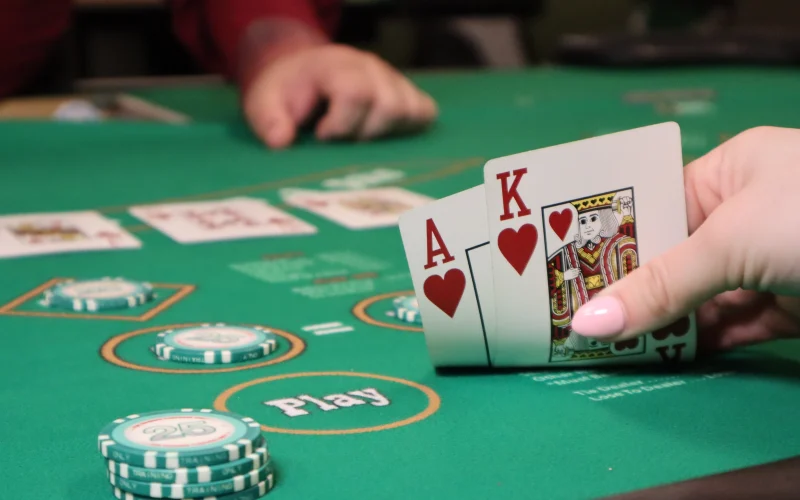
C-betting is considered one of the fundamental tactics in Poker because it directly impacts both technical and psychological aspects. Below are the important reasons why C-betting is a tool used by many professional players:
- Maintaining the initiative: When C-betting, you continue to maintain your role as the leader of the hand, forcing your opponents to react to your actions.
- Creating psychological pressure: Opponents with average or weak hands will often hesitate and tend to fold under constant pressure.
- Gathering information: Your opponent’s reaction to C-betting helps you assess their hand strength, playing style, and willingness to call.
- Proper bluff support: C-bet allows you to represent a strong hand, even if your actual hand isn’t good.
- Optimized profit: With strong hands, C-bet helps build the pot early and maximize the value from your opponents.
It’s important to note that effective C-bet isn’t about “betting as much as possible,” but rather depends on your ability to read the situation and accurately assess the board structure, the number of opponents, and their seating positions.
Common C-bet types and how to apply them effectively

C-bet in Poker isn’t just a single method. Depending on your strategic goals and specific situations, players can choose from various C-bet forms. Below are some common C-bet types and how to apply them appropriately.
Standard bet when you have a strong hand
This is the most basic and safest type of C-bet. When you hold strong hands like top pair, overpair, or set, C-betting with standard sizing helps you:
- Build the pot to maximize profit.
- Prevent opponents from drawing cards for free.
- Demonstrate consistent strength and limit exploitation.
In this case, the bet amount usually ranges from 50% to 70% of the pot, depending on the “wetness” of the board.
C-bet when empty (bluff C-bet)
Bluff C-bet is a strategy of betting even when your current hand is not strong. This is based on the assumption that opponents will fold under pressure, especially when the flop is unfavorable to them.
However, bluff C-bet should only be used selectively, based on:
- A dry flop structure with little chance of connections.
- A small number of opponents.
- Opponents tend to play cautiously.
Overusing the C-bet bluff can make you vulnerable to being read and counter-attacked in later rounds.
Bet small to test your opponent’s reaction
Small C-bets are often used to gauge the opponent’s reaction. With low stakes, you minimize risk while observing your opponent’s response to make your next decision.
If your opponent only calls, you can consider continuing to pressure them on their turn. Conversely, if they raise aggressively, it could be a sign that you are at a disadvantage.
Notes on C-Betting in Poker
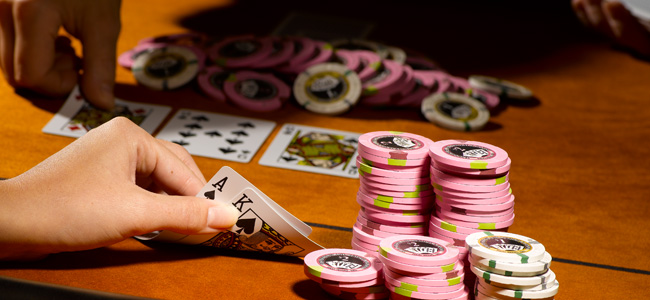
Although an effective strategy, C-betting doesn’t always yield positive results. To minimize mistakes, players should pay attention to the following important points:
Avoid C-betting too frequently against opponents who tend to call often.
Limit C-betting when the pot has too many participants.
Carefully calculate pot odds and stack size before deciding.
Observe the seating position and playing style of your opponents.
Adjust the frequency of C-betting to avoid being exploited.
Flexibly changing your playing style, combining value C-bets and bluff C-bets, will make you more unpredictable and effective in the long run.
What is C-betting in Poker? C-betting in Poker is a core strategy that helps players maintain control of the hand and create continuous psychological pressure on their opponents. When used at the right time, with the right opponent, and in accordance with the board structure, the C-bet not only increases the winning rate but also contributes to building a solid and predictable playing style.
To maximize the effectiveness of the C-bet, players need to combine strategic knowledge, observation skills, and flexible thinking. Poker is not just a game of luck, but a long-term battle of wits, where small decisions like the C-bet can make a big difference in the outcome.